The best Seychelles snorkeling is inside the marine parks. From Mahé, the Ste Anne Marine Park is a 10-minute boat ride and pairs well with a stop on Moyenne Island, while Port Launay works from the beach. From Praslin or La Digue, Ile Cocos is the standout. Go April to May or October to November for calm water.
Seychelles snorkelling is at its best inside the protected marine parks, where fishing and collecting are banned and boats have to moor in set places. There are good beach spots too, but inside the parks SPGA rangers patrol and check tickets, and the reef is protected from fishing.
One thing to know before you go: the reefs took a heavy hit in the 2024 global bleaching event. The fish are there. Much of the coral is still growing back. More on that below.
The best snorkelling spots at a glance
Fees are SPGA’s non-resident rates for ages 12 and over, checked in October 2026. Park sites take cards only. Beau Vallon and Anse Lazio are not on SPGA’s fee list.
1. Ste Anne Marine Park and Moyenne Island
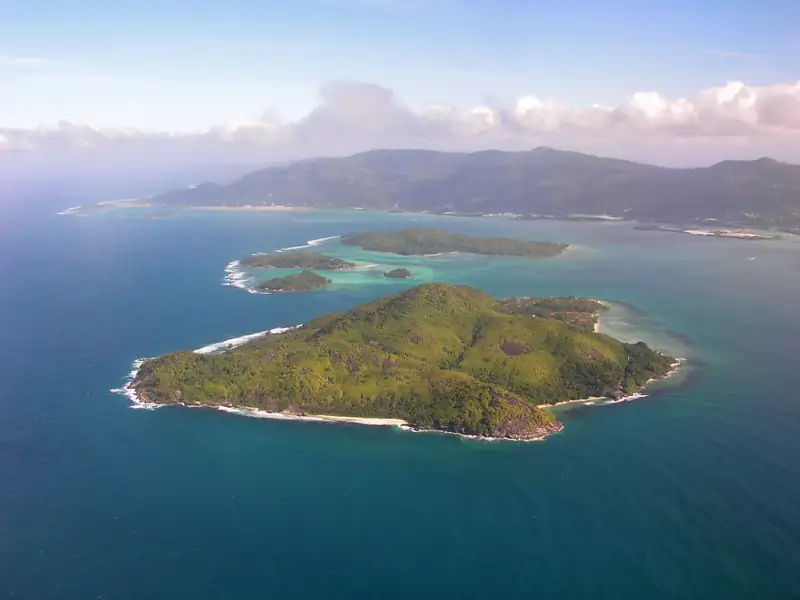
If you are staying on Mahé, start here. The Ste Anne Marine National Park is about 5 km offshore, 10 minutes by boat from Victoria, and SPGA calls it “a perfect snorkeling spot.” It has one of the largest seagrass meadows in the granitic islands, where green turtles feed, plus coral reefs around six islands and occasional bottlenose dolphins.
Local operators often name the reef between Moyenne Island and Ste Anne as the best stretch, with Cerf’s reefs second; currents can run stronger around Cerf. If snorkelling is the whole point, the semi-private snorkelling trip spends a half day on three reef stops instead of the usual lunch-and-landing routine. Tour snorkel stops report parrotfish, angelfish and the odd hawksbill turtle.
The reason to pick a tour that lands on Moyenne is what happens after you dry off. You get a 30-minute trail through the forest Brendon Grimshaw planted, with giant tortoises wandering across the path. Full-day trips usually combine snorkelling, lunch and the walk. Read how to visit Moyenne for fees and timings.
Not a swimmer? Glass-bottom boats and a semi-submarine from Eden Island show you the same reefs without getting wet.
2. Port Launay
Port Launay, on Mahé’s northwest coast, is the only marine park in Seychelles you can reach by road, about 30 minutes’ drive from Victoria via La Misère. SPGA says the reefs on both sides of the bay are good for snorkelling, and there is a marked underwater trail with a species leaflet. Whale sharks feed here in season.
It is the easiest marine park snorkel to do on your own. Buy the ticket online first, since the site only takes cards.
3. Baie Ternay
Next door to Port Launay, Baie Ternay has no road at all. You arrive by boat from Beau Vallon or Port Launay. The bay is small, about 0.8 km², but SPGA lists hawksbill turtles, moray eels and shoals of catfish sheltering among the granite boulders, with whale sharks and dolphins possible. Yachts shelter here during the southeast monsoon, which makes it a good choice from May to September when other coasts are rough.
4. Fairyland, Anse Royale
For a free, easy shore snorkel, Fairyland at the end of Anse Royale is hard to beat. A reef shelters a lagoon 1 to 3 m deep. Near the rocks you can expect semicircle angelfish, bluespotted groupers and goldbar wrasse; spotted eagle rays sometimes come in from further out.
Snorkeling Report rates it beginner level in calm conditions. At low tide the lagoon gets very shallow, so swim out toward Ile Souris for more depth, but do not go round the back of the islet, where the current is often strong.
5. Beau Vallon
Beau Vallon, Mahé’s busiest beach, has almost 2 km of sand and reef close enough to make it a base for diving and snorkelling. It is the place to hire gear or join a boat to Baie Ternay. This coast tends to be the calmer side of Mahé from May to September, when the southeast trades blow (SPGA notes yachts shelter in nearby Baie Ternay then).
6. Ile Cocos
SPGA describes Ile Cocos as the best-known snorkelling spot in Seychelles. It is a small marine park of three islets (Ile Cocos, Ile La Fouche and Ilot Plate) about 10 minutes by boat from La Digue, with very clear water. Hawksbill turtles are the main attraction, and SPGA says whale sharks pass roughly August to November.
You get there on a tour from La Digue or Praslin. If you are only on Mahé, it is a long day, so think about it as part of an island-hopping trip.
7. Curieuse and St Pierre
Curieuse, about 2 km off Praslin, is better known for its tortoises and mangroves, but SPGA lists Coral Gardens and Pointe Rouge for reef snorkelling. St Pierre islet, a five-minute boat ride from Curieuse, is the other stop most Praslin snorkel trips make; SPGA lists it for both snorkelling and diving. Boats leave from Côte d’Or. Curieuse’s fee is the highest of the marine parks at Rs 300.
8. Anse Lazio
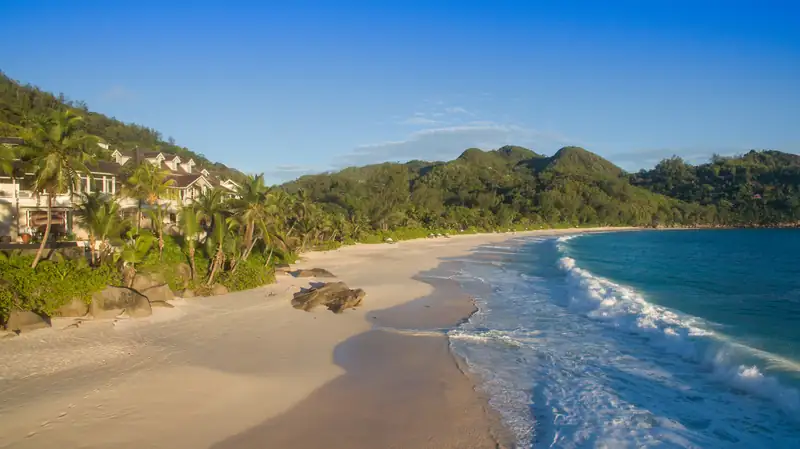
Praslin’s best-known beach has reef at both ends, about 500 m apart. The eastern end is shallower with more coral. Reviews are mixed: the rocky entry gets rough in a swell, and jellyfish turn up at certain times of year. Worth a look if you are on the beach anyway. For Mahé’s other swimming beaches, see the best beaches in Mahé.
When to go
April to May and October to November are the transition months between monsoons, when the wind drops and the sea is usually calmest with the best visibility. From May to September, stick to the northwest coast of Mahé. From November to March, the sea is often calm, but this is the rainy season. The best time to visit guide has the month-by-month figures.
Whale sharks: roughly August to November around Ile Cocos, and seasonally at Port Launay.
Reef condition in 2026
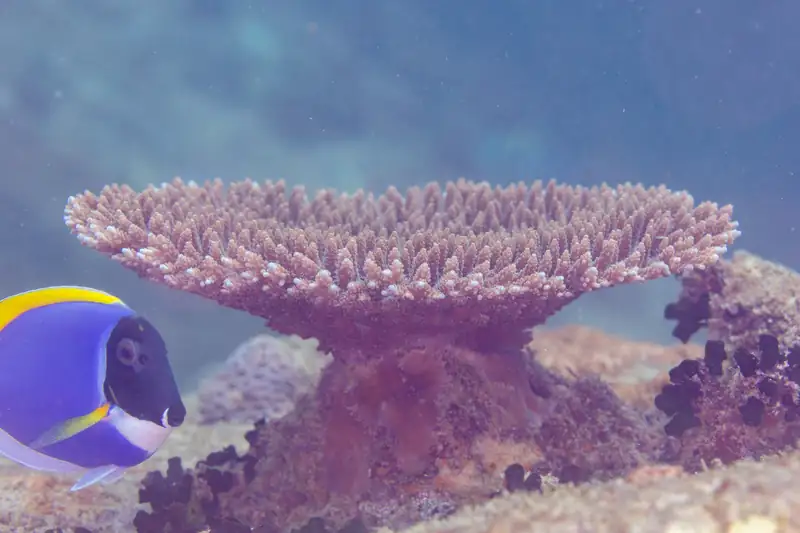
Be realistic about the coral. The 2024 global bleaching event reached the inner islands by April 2024. The national reef status report published in May 2026 called 2024 the most severe heat-stress year on record and put inner-island live hard coral cover at about 20% in 2025, well below pre-2016 levels. Figures for individual sites like Ste Anne are not published.
What that means in the water: plenty of reef fish and turtles, patches of healthy coral, and stretches of bare or algae-covered rock between them.
Rules and what to bring
Inside the marine parks, SPGA bans fishing, spear guns, and collecting shells, coral or any marine life. Do not stand on coral, and keep your distance from turtles.
Pack your own reef-safe sunscreen, a hat and a towel. One Moyenne visitor reported that sunscreen is not sold on the boat. Bring water shoes too: on Moyenne there is no jetty and you wade ashore.
If you want to compare boats, our tours page lists every Ste Anne trip we have checked, with which ones actually land on Moyenne.