Olivier Levasseur, known as La Buse, was a French pirate hanged on Réunion in 1730. Legend says he hid a fortune in the Indian Ocean and left a coded clue, and people have dug for it on Mahé since 1913. Moyenne has its own, separate treasure legend and two graves marked Unhappily Unknown. Nothing has been found.
The Seychelles has two pirate treasure stories that often get blended into one. The first is about a real pirate, Olivier Levasseur, and a hunt on Mahé that has run for more than a century. The second is a local legend about Moyenne Island, its two nameless graves and the treasure they are supposed to guard.
They are separate stories. No source we found connects La Buse to Moyenne, and both are folklore built around a few hard facts. Here is which parts are which.
Who was La Buse?
Olivier Levasseur was born in Calais around 1689 (sources give anything from 1688 to 1690) and was known as La Buse, the Buzzard. He sailed as a French privateer during the War of the Spanish Succession, then in 1716 joined Benjamin Hornigold’s pirate company.
From 1720 he was raiding from Sainte-Marie, off Madagascar. His biggest prize came with fellow pirate John Taylor: the Portuguese ship Nossa Senhora do Cabo, which had been battered by a storm, thrown its 72 cannons overboard and anchored off Réunion for repairs. The pirates took gold, silver, diamonds and a gold cross known as the Fiery Cross of Goa, which Levasseur claimed in the share-out.
In 1724 he sent someone to Réunion to ask about an amnesty. The French wanted much of the loot back, so he walked away from the deal and settled secretly in the Seychelles.
It did not last. He was captured near Fort Dauphin in Madagascar, taken to Saint-Denis on Réunion, and hanged for piracy at 5pm on 7 July 1730. A gravestone attributed to him stands in Saint-Paul, Réunion, though whether he is actually buried there is not settled.
The cryptogram on the scaffold
This is the part everyone knows, and it is the part with least evidence behind it.
The story goes that Levasseur wore a necklace carrying a 17-line coded message to the gallows, threw it into the crowd, and shouted that whoever could understand it would find his treasure. The cryptogram has been copied, decoded and argued over ever since.
The trouble is the date it turns up. No record from 1730 mentions the cryptogram, the necklace or the speech. The text first appears in a 1934 book by the French historian Charles de La Roncière, and historians of piracy now generally regard the gallows scene as a twentieth-century invention. Treat it as folklore.
That has not stopped anyone digging.
The hunt at Bel Ombre, Mahé
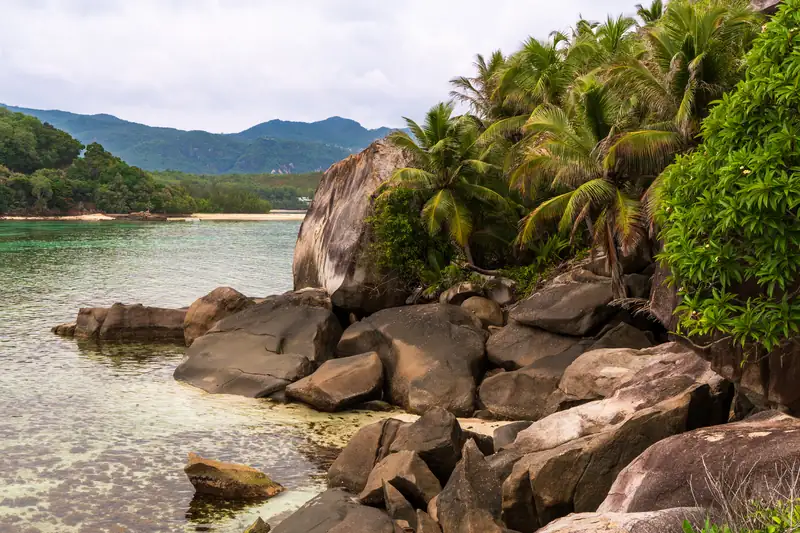
The longest-running search is on the beach at Bel Ombre on Mahé. According to the Seychelles Heritage Foundation, the Savy family dug there between 1913 and 1923 and reported finding coffins holding skeletons. The rocks around the site carry carvings of dogs, snakes, tortoises, horses and human figures, which treasure hunters read as clues.
Reginald Cruise-Wilkins, an Englishman who arrived in the Seychelles in 1948, took up the search from about 1949 (some accounts say 1950). He read the clues through Masonic symbols, the Zodiac and the Labours of Hercules, dug and tunnelled at the beach, and found old guns, coins and coffins. He did not find the hoard. He died on 3 May 1977.
His son John, a Seychellois history teacher, carried on. A 2016 report said the government had issued a new licence for digging near Bel Ombre. We have not found any report of a find since.
Réunion has its own hunters. Emmanuel Mezino claimed in a 2014 book to have located the treasure but lacked permits to dig, and a 2023 book by Cyrille Lougnon pointed to a cairn at La Ravine à Malheur. On Rodrigues, the grandfather of the writer J. M. G. Le Clézio spent about twenty years digging in a gully.
The Moyenne treasure legend
Moyenne’s story is smaller, and stranger, and it has nothing documented to do with La Buse.
The Seychelles Tourism Board says local lore links the island to buried treasure and ghosts, presumably from a time when pirates used it. In 2009 the Seychelles Nation repeated that pirates reportedly buried treasure there and that people had reported ghostly apparitions.
The legend, as BBC Travel told it in 2022, says two men were killed so their spirits would guard a buried treasure. Maps of the island show two sites marked with a skull and crossbones.
The Unhappily Unknown graves
When Brendon Grimshaw and René Antoine Lafortune were clearing paths after Grimshaw bought the island in 1962, they found two old graves. Their stones read “Unhappily Unknown”. Grimshaw believed they held pirates, and the treasure legend has attached itself to them ever since.
Nobody knows who is buried there. An early-1990s travelogue describes them plainly as two graves of unknown people, and that is as far as the evidence goes.
You can see them. They are on the trail round the island, along with the graves of Grimshaw and his father, four graves in total. The trail also passes a small chapel near the old graves. The Reef Safari with lunch gives you time ashore on Moyenne to find them after a morning on the reef. Our guide to visiting Moyenne explains the other ways to get there.
Did Grimshaw dig for it?
Yes. Grimshaw and Lafortune looked for the treasure and never found any. Some accounts say Grimshaw dug at two sites and moved tons of rock; we could not confirm the details. A Cerf Island resort page still lists a “treasure dig” among the island’s sights. Read more about the man himself on our Brendon Grimshaw page.
Ghosts and Miss Best
Before Grimshaw, Moyenne was abandoned from about 1915 into the early 1970s. An earlier owner, an Englishwoman the Tourism Board calls Miss Emma Best, kept stray dogs and other animals on the island. One guide names her Mary Best and says her ghost haunts it. That belongs in the same box as the treasure: local lore with no record behind it.
Is there really treasure in the Seychelles?
Parts of the La Buse story are documented: the man, the capture of a rich Portuguese ship, the hanging in 1730. The rest, including the coded clue, the buried hoard and any link to Moyenne, rests on legend and on a book written two centuries later. Plenty of people have dug. Nobody has found it.
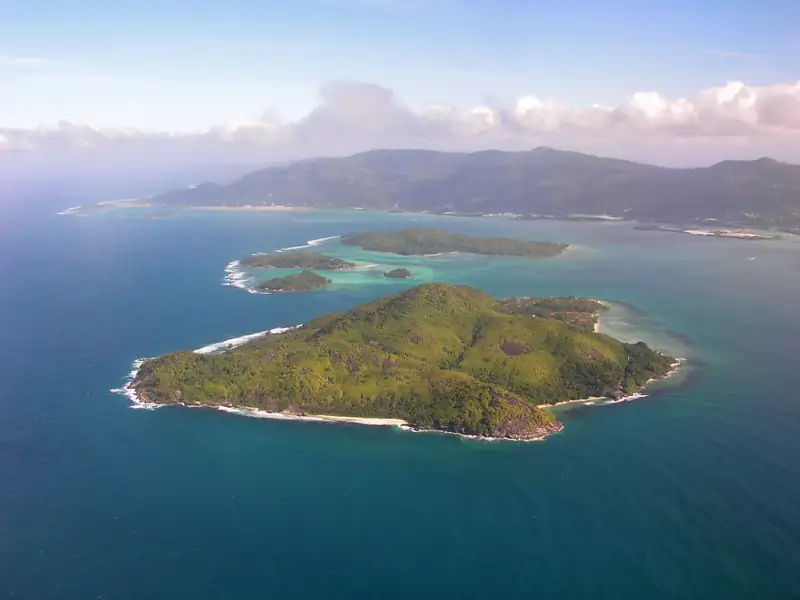
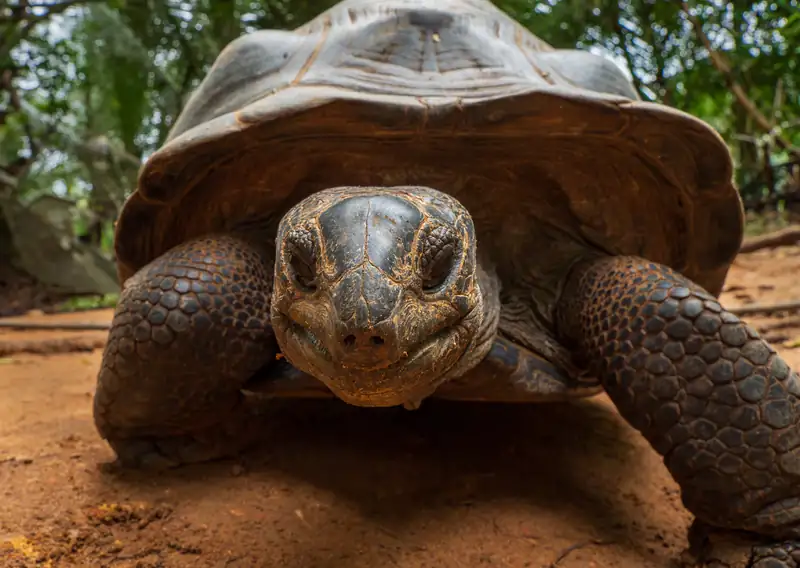
If you want to stand somewhere with a treasure story attached, Moyenne is the easier of the two to visit. It is in the Ste Anne Marine National Park, a short boat ride from Victoria, and the graves are on the same path as the giant tortoises.